
As businesses strive to stay competitive in an increasingly data-driven world, the demand for advanced analytics and automation solutions continues to grow. Low-code development platforms are emerging as powerful tools that can help drive the next wave of innovation in these areas. This blog explores why low-code could be the key to advancing analytics and automation, highlighting its benefits, key features, and real-world applications.
Understanding Low-Code Development
What is Low-Code Development?
Low-code development platforms provide a visual approach to software development, allowing users to build applications with minimal hand-coding. Key aspects include:
- Visual Interfaces: Drag-and-drop components and model-driven logic simplify the development process.
- Reusable Components: Pre-built templates and modules accelerate application creation.
- Integration Capabilities: Seamless integration with existing systems, databases, and third-party services.
Advantages of Low-Code Platforms
Low-code platforms offer numerous benefits that make them ideal for driving analytics and automation:
- Speed and Efficiency: Rapid development cycles reduce time-to-market for new solutions.
- Accessibility: Enabling non-developers, such as business analysts, to participate in the development process.
- Flexibility: Easily adaptable to changing business needs and requirements.
- Cost-Effectiveness: Lower development and maintenance costs compared to traditional coding approaches.
How Low-Code Drives Analytics
Accelerating Data Integration
Low-code platforms simplify the integration of disparate data sources, facilitating comprehensive analytics:
- Data Connectivity: Pre-built connectors and APIs enable quick integration with various data sources.
- Unified Data Models: Centralizing data from multiple systems into a cohesive model for analysis.
- Real-Time Data Access: Ensuring timely access to data for up-to-date insights.
Enhancing Data Visualization
Low-code platforms enable the creation of sophisticated data visualizations, making insights more accessible:
- Drag-and-Drop Dashboards: Easily design and customize interactive dashboards.
- Advanced Charting Tools: Utilize a wide range of chart types and visualization options.
- User-Friendly Interfaces: Simplified interfaces allow non-technical users to create and interpret visualizations.
Enabling Predictive Analytics
With built-in AI and machine learning capabilities, low-code platforms empower businesses to leverage predictive analytics:
- AI Integration: Integrate AI models into applications with minimal effort.
- Machine Learning Models: Build, train, and deploy machine learning models using visual tools.
- Predictive Insights: Generate actionable insights to inform decision-making and strategy.
How Low-Code Enhances Automation
Streamlining Workflow Automation
Low-code platforms provide tools to automate complex workflows and business processes:
- Visual Workflow Designers: Design automated workflows using intuitive visual interfaces.
- Pre-Built Templates: Leverage templates for common automation scenarios.
- Conditional Logic: Implement rules and conditions to control workflow execution.
Automating Routine Tasks
Low-code platforms excel at automating repetitive and time-consuming tasks:
- Robotic Process Automation (RPA): Integrate RPA capabilities to automate routine tasks and processes.
- Task Scheduling: Automate task scheduling and execution based on predefined triggers.
- Error Reduction: Minimize human error by automating manual processes.
Enhancing Customer Experience
Automation driven by low-code platforms can significantly improve customer experience:
- Personalized Interactions: Automate personalized communication based on customer data and behavior.
- Self-Service Solutions: Develop self-service portals and chatbots to enhance customer support.
- Faster Response Times: Automate responses to customer inquiries for quicker resolution.
Real-World Applications of Low-Code in Analytics and Automation
Case Study 1: Financial Services
Client: A leading financial services firm
Challenge: The client needed to integrate data from various systems to gain comprehensive insights and automate compliance reporting.
Solution: Using a low-code platform, the firm integrated data sources and created automated compliance reports, featuring:
- Unified Data Dashboard: A centralized dashboard displaying real-time data from multiple sources.
- Automated Reporting: Automatic generation and distribution of compliance reports.
- Predictive Analytics: AI-driven models to predict market trends and inform investment strategies.
Results: Improved data visibility, enhanced compliance reporting, and better-informed decision-making.
Case Study 2: Healthcare
Client: A healthcare provider
Challenge: The client required automation of patient management processes and integration of electronic health records (EHR) for better patient care.
Solution: The provider used a low-code platform to automate patient management and integrate EHR systems, featuring:
- Automated Patient Scheduling: Streamlined scheduling of patient appointments and follow-ups.
- EHR Integration: Unified access to patient records across different systems.
- Patient Monitoring: Real-time monitoring and alerts for patient conditions.
Results: Enhanced patient care, reduced administrative workload, and improved operational efficiency.
Case Study 3: Retail
Client: A retail company
Challenge: The client needed to automate inventory management and gain insights into customer behavior to improve sales.
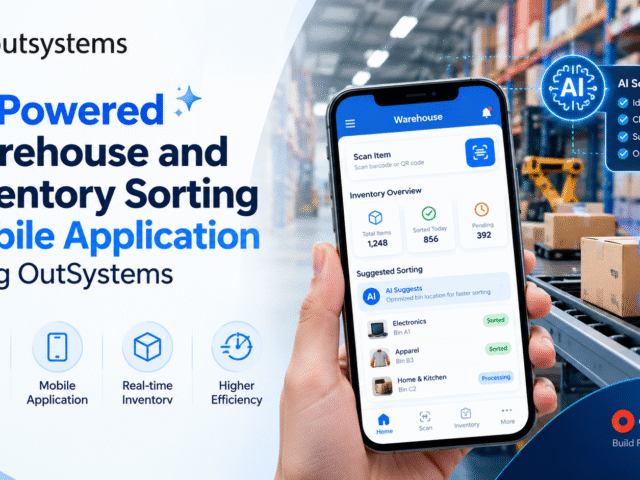
Solution: Using a low-code platform, the company automated inventory processes and developed customer analytics tools, featuring:
- Automated Inventory Tracking: Real-time tracking of inventory levels and automated reorder processes.
- Customer Analytics: Insights into customer purchasing patterns and preferences.
- Personalized Marketing: Automated, personalized marketing campaigns based on customer data.
Results: Optimized inventory management, increased sales, and enhanced customer engagement.
Conclusion
Low-code development platforms are revolutionizing the fields of analytics and automation by providing powerful tools that enhance efficiency, flexibility, and accessibility. By leveraging low-code solutions, businesses can accelerate their digital transformation, reduce costs, and drive innovation. As the demand for advanced analytics and automation continues to grow, low-code platforms like OutSystems are poised to lead the way, unleashing new possibilities for businesses across industries. Embrace the power of low-code to stay ahead in the competitive landscape and transform your approach to analytics and automation.